
Demolition
The demolition process begins with a thorough site inspection and planning phase. Engineers and demolition experts assess the structure’s design, materials used, age, and surrounding environment.
This evaluation helps identify potential risks such as weak structures, hazardous materials (like asbestos), or nearby buildings that could be affected. Based on this assessment, a suitable demolition method—manual, mechanical, or controlled implosion—is selected. Necessary permits are obtained from local authorities to ensure compliance with safety and environmental regulations.
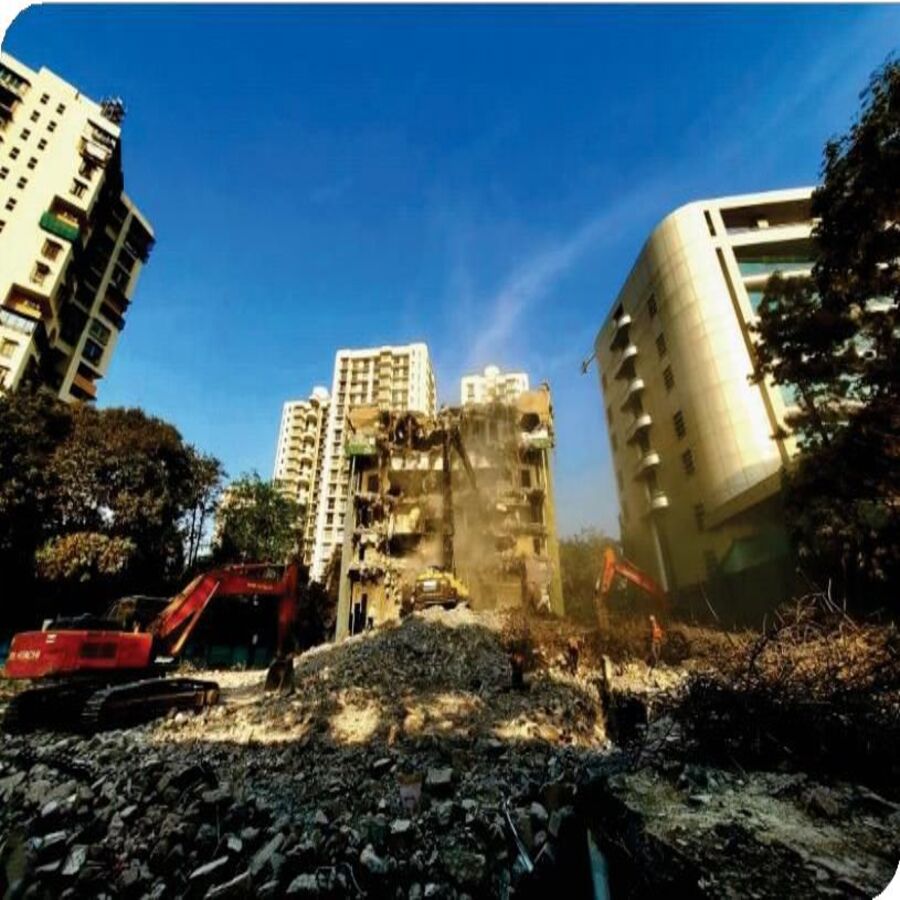
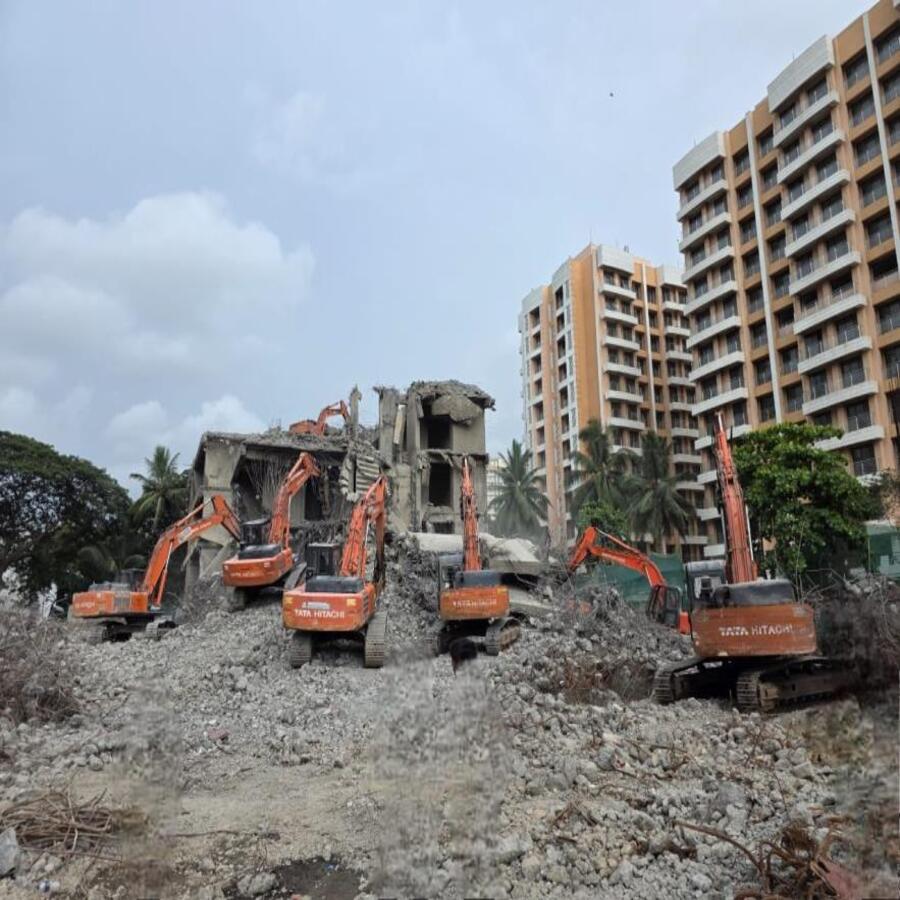
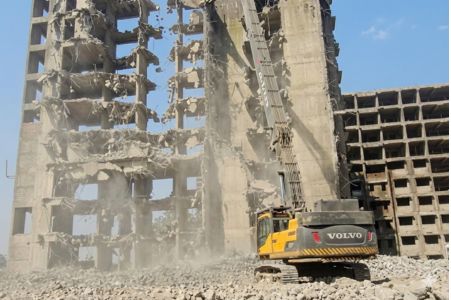
Once planning is complete, the site is prepared for demolition. All utility connections such as electricity, gas, water, and sewage are safely disconnected to prevent accidents. Safety measures including barricades, warning signs, dust control systems, and protective equipment are implemented. The demolition is then carried out in a controlled and systematic manner, starting from non-load-bearing components and progressing to main structural elements. This approach ensures worker safety and minimizes impact on nearby structures.
Key Steps in the Demolition Process
- Site inspection and structural assessment
- Selection of demolition method
- Safety planning and regulatory approvals
- Utility disconnection (electricity, gas, water, etc.)
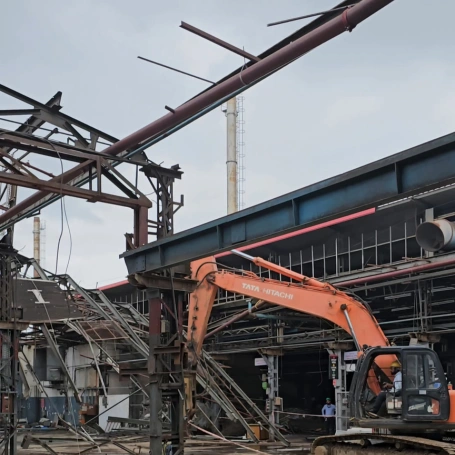
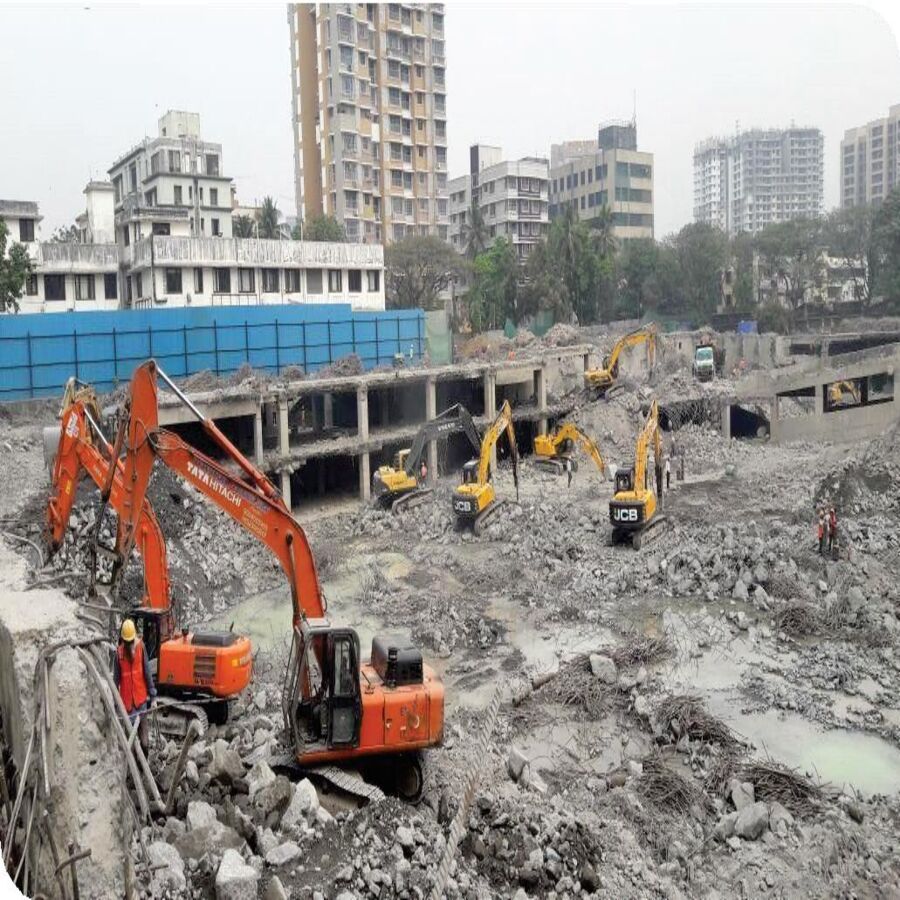
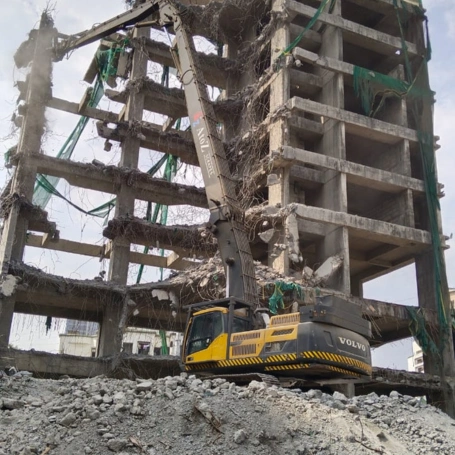
- Controlled demolition execution
- Waste segregation and debris removal
After the structure is demolished, the focus shifts to site clearance and waste management. Debris is carefully sorted to recover recyclable materials such as steel, concrete, and wood, reducing environmental impact. Hazardous waste is disposed of according to legal guidelines. The site is then leveled and cleared, making it safe and ready for future construction or redevelopment. A final inspection ensures that the demolition has been completed safely, efficiently, and in compliance with all regulations.
Execution and Waste Management Points
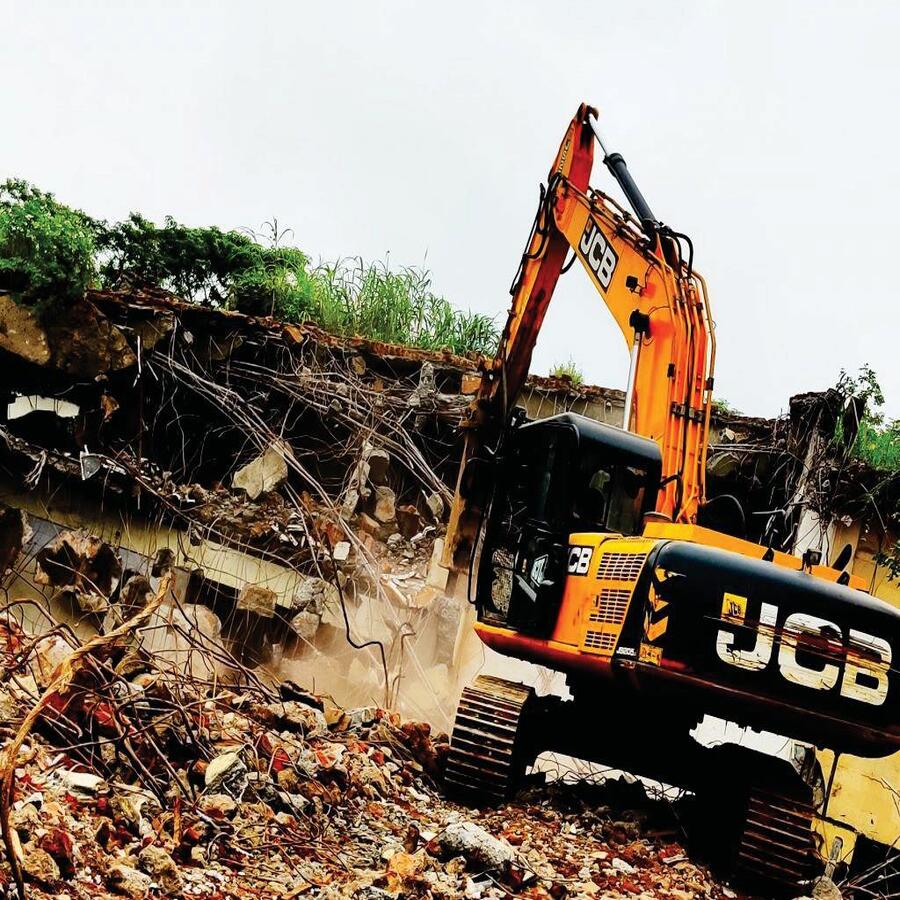
- Use of machinery such as excavators, breakers, and wrecking balls
- Dust and noise control using water sprays and sound barriers
- Segregation of recyclable and non-recyclable materials
- Safe handling of hazardous waste
- Transportation of debris to authorized disposal or recycling facilities