
Structural Demolition
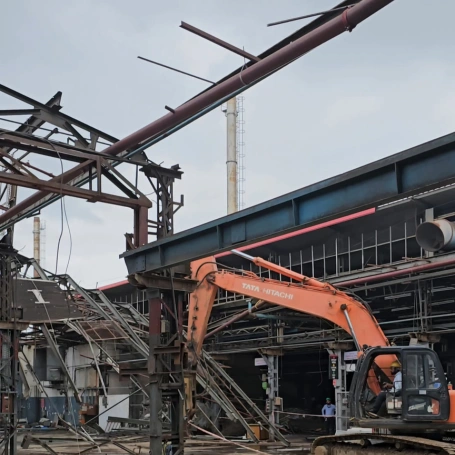
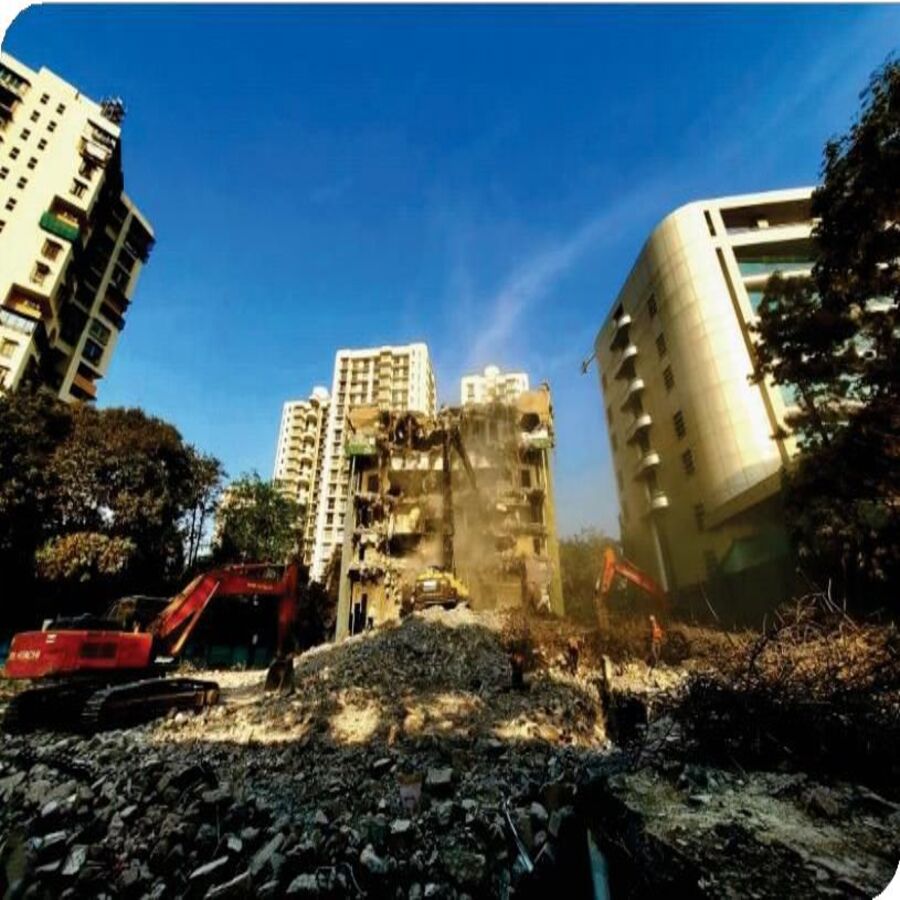
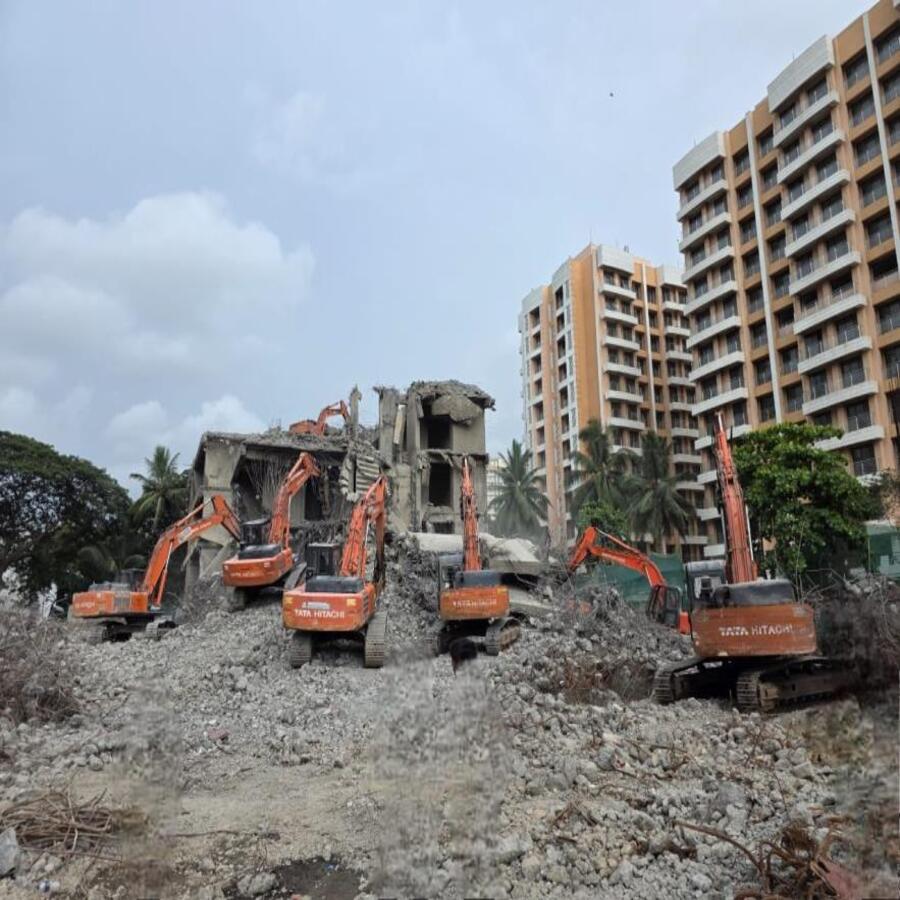
Structural demolition involves tearing down key parts of a building—like load-bearing walls, beams, columns, and foundations—using heavy machinery, usually when a full or major removal is needed.
Key Steps in the Structural Demolition Process
- Structural survey and engineering assessment.
- Selection of demolition method.
- Safety planning and statutory approvals.
- Disconnection of utilities and services.
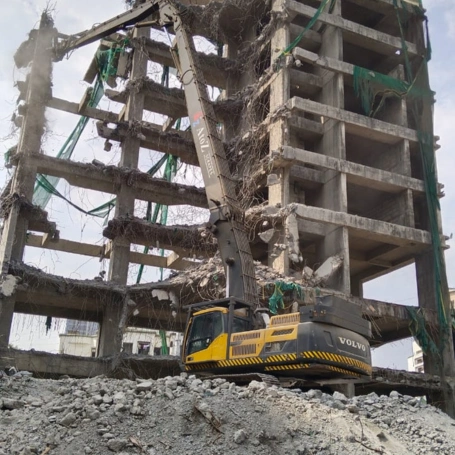
- Controlled demolition of load-bearing elements.
- Debris removal and site management.
Structural Demolition Process
Structural demolition begins with a comprehensive engineering assessment of the building. Structural drawings, material strength, foundation type, and surrounding structures are analyzed to identify load-bearing elements and potential risks. Based on this study, the most suitable demolition method—mechanical, manual, or controlled collapse—is selected. All required permissions are obtained from authorities to ensure legal, environmental, and safety compliance.
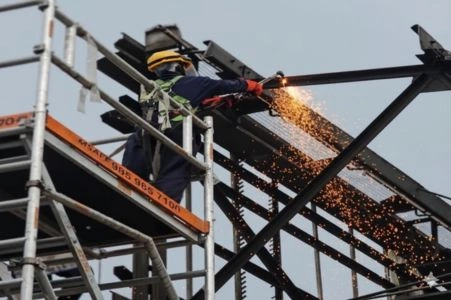
Before demolition starts, all utility services such as electricity, gas, water, and communication lines are safely disconnected. Safety measures including barricading, exclusion zones, dust suppression, and protective equipment are put in place. Demolition is then carried out in a planned sequence, usually from the top down, ensuring that load-bearing components are removed in a controlled manner to prevent sudden collapse and protect nearby structures.
Safety, Control, and Waste Handling Points
- Continuous structural stability monitoring.
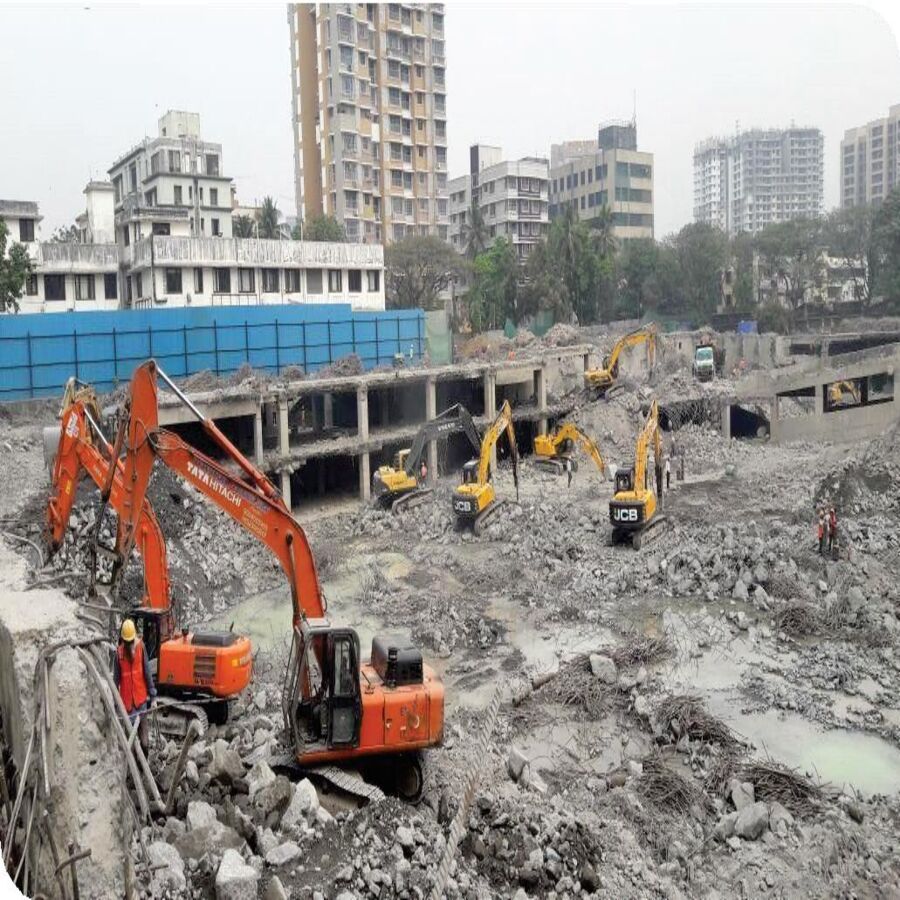
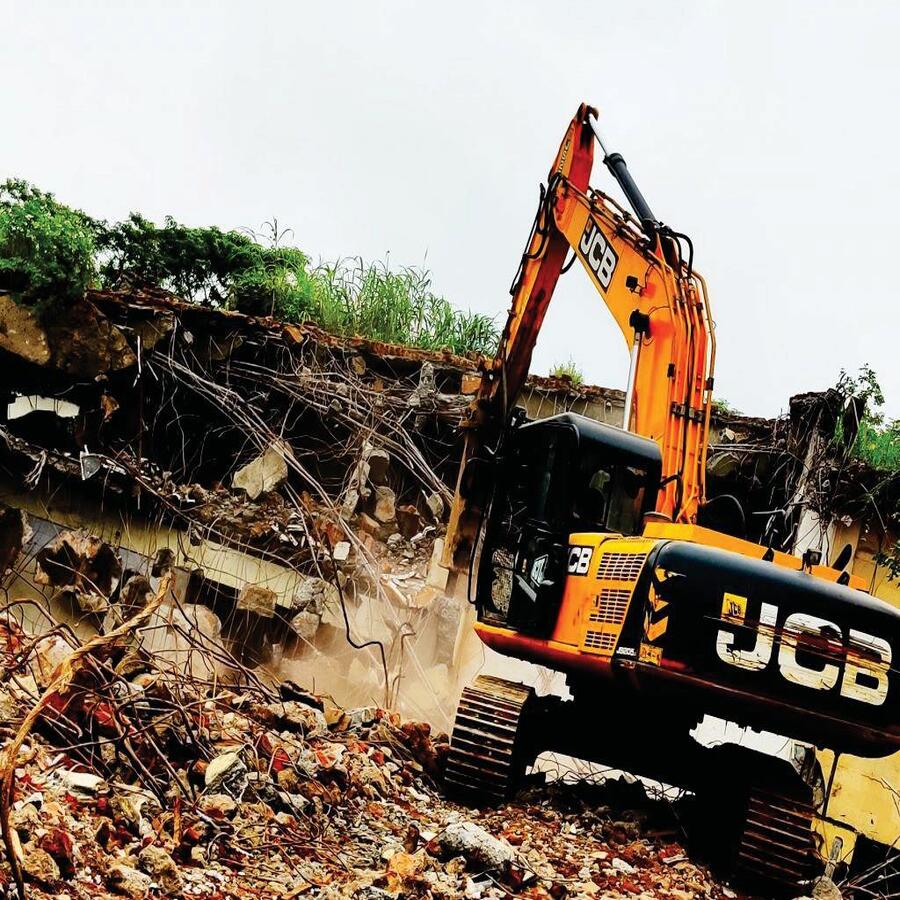
- Use of heavy machinery such as excavators and breakers.
- Dust, vibration, and noise control measures.
- Segregation of reusable, recyclable, and waste materials.
- Safe handling of hazardous debris.
Final Stage Explanation
After structural demolition is completed, debris is systematically cleared from the site. Recyclable materials such as steel and concrete are separated, while waste is disposed of according to environmental regulations. The site is leveled and inspected to ensure safety, making it ready for future construction or redevelopment, thus completing the structural demolition process efficiently and responsibly.