
Interior Demolition
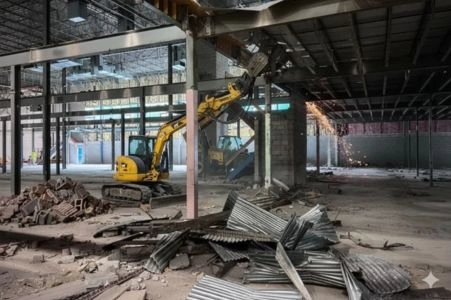
Interior demolition is the selective removal of interior parts of a building—such as walls, ceilings, floors, fixtures, and utilities—while preserving the exterior structure. It is often done during renovations or remodeling projects.
Key Steps in the Interior Demolition Process
- Site inspection and interior assessment.
- Identification of load-bearing and non-load-bearing elements.
- Safety planning and approvals.
- Utility shut-off and protection of existing systems.
- Selective removal of interior elements.
- Debris collection and disposal.
Interior Demolition Process
Interior demolition begins with a thorough assessment of the existing space. Engineers and supervisors inspect walls, ceilings, flooring, partitions, and fixtures to identify what needs to be removed and what must be preserved. Special attention is given to load-bearing elements, fire systems, electrical wiring, plumbing lines, and HVAC services. A detailed demolition plan is prepared to ensure the work is carried out safely without affecting the building’s structural integrity.
Before work starts, all relevant utilities are shut off or safely rerouted. Protective measures such as dust barriers, floor coverings, and noise control are installed to minimize disturbance to surrounding areas. Interior components like partitions, false ceilings, flooring, cabinets, and fixtures are then carefully dismantled using manual tools or light machinery. This selective approach allows for precision and reduces damage to retained structures.
Safety and Waste Management Points
- Use of personal protective equipment (PPE).
- Dust and noise control measures.
- Segregation of reusable and recyclable materials.
- Safe removal of electrical and plumbing components.
- Continuous site supervision and safety checks.
Final Stage Explanation
After interior demolition is completed, debris is removed and the area is thoroughly cleaned. Materials suitable for reuse or recycling are separated, while waste is disposed of according to regulations. The space is then prepared for the next phase, such as renovation, remodeling, or new interior construction, ensuring a safe and clean working environment.